
Founder of Neurofeedback Luxembourg
It was only at the age of 40 that I discovered my diagnosis of ADHD, which finally explains many of my setbacks and difficulties.
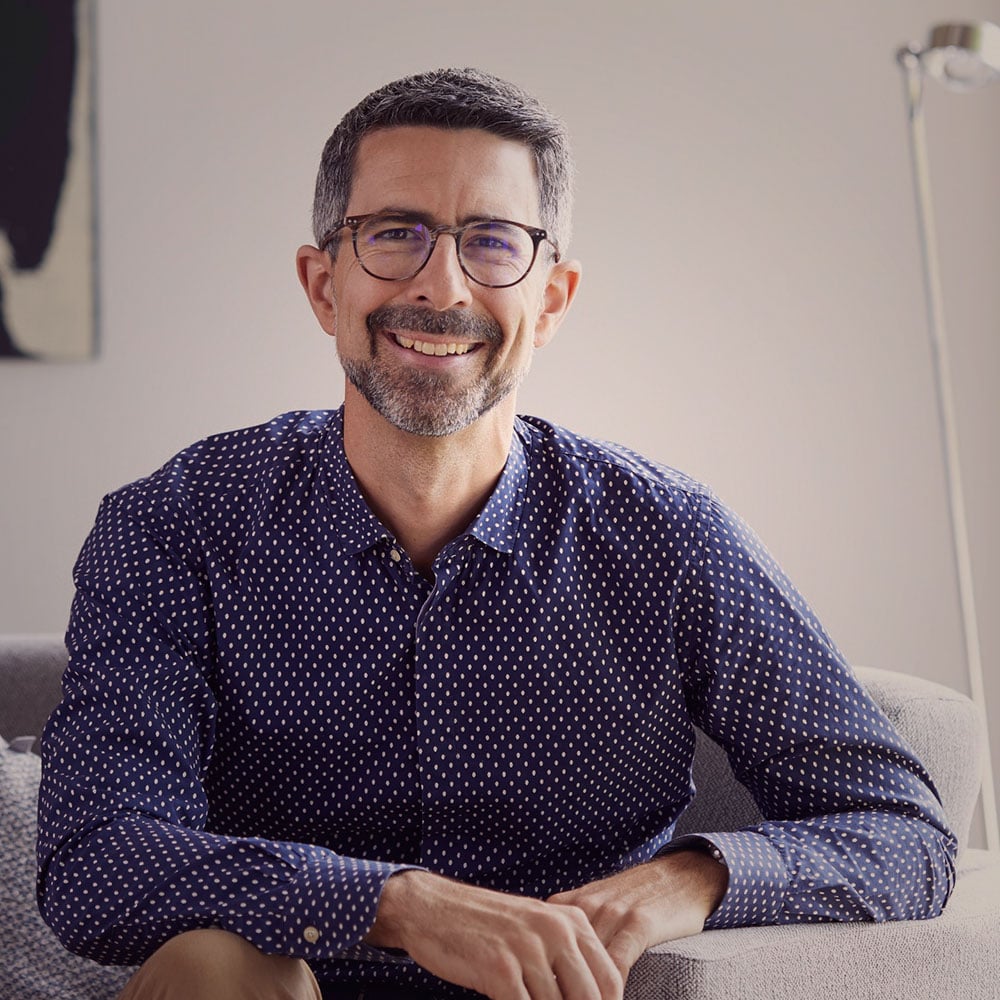
François is the founder of Neurofeedback Luxembourg. He has two children and lives in Luxembourg city. He is passionate about new technologies and biohacking.
“I have always been attracted by pioneering, innovative and disruptive projects. After studying the functioning of machines, philosophy, psychology, criminology, computer graphics and virtual reality, I landed in the human-machine interface with applied neurophysiology: Neurofeedback.
My life did not start in the best conditions which left me with some imprints (orphan, dysfunctional families of origin), what I would call today PTSD, but I was given the diagnosis of “Depression”.
After going through medication, outpatient and inpatient therapies, many trainings (NLP, Hypnosis, EMDR, Coaching, Process Communication, Provocative Therapy, etc.), the problems of addiction and emotional instability were greatly reduced, but I had not yet recovered my brain’s cognitive abilities (certainly a burn-out and a head trauma did not help).
I was only 40 years old when I was diagnosed with ADHD, which finally explains many of my setbacks and difficulties: emotional instability, abandoned studies, changes of direction, self-medication and addictions, oppositional and risky behaviors, etc.
While trying to find solutions to this chaos in my head, I came across Neurofeedback: I signed up for a course and volunteered for the first demonstrations, and there I immediately felt the effects: someone had turned my brain back on!
I decided to make it my job (despite a lot of resistance from health professionals), and to share the benefits of this little-known and underestimated technique in Luxembourg, and even in Europe.I have been trained by some of the greatest experts in the field: Akademie für Neurofeedback, Thomas Feiner, Doerte Klein, Tom Collura, Mark Smith, Pennijean Gracefire, Dr. Harry Keriadisis, Dr. Juri Kropotov, Dr. Richard Soutar, Dr. Robert Thatcher, Dr. Nicholas Dogris, Dr. Tiff Thompson, Jay Gunkelman, Martin Wuttke, etc… to arrive after more than 2000 brains analyzed and more than 1500 sessions provided in 2021 to the point of developing my own approach which promises the fastest, longest lasting results with predictable effects.
This work has become my passion, and I love to transmit this knowledge with our clients, my team but also to train other professionals (psychologist, psychiatrist, neurobiologist, university training, etc.)
The changes observed in our clients every day continue to fascinate me and with the great potential of new technologies such as photobiomodulation and new projects (neuromeditation, scientific publications) the future promises to be full of adventures and challenges, there is no risk of getting bored….”
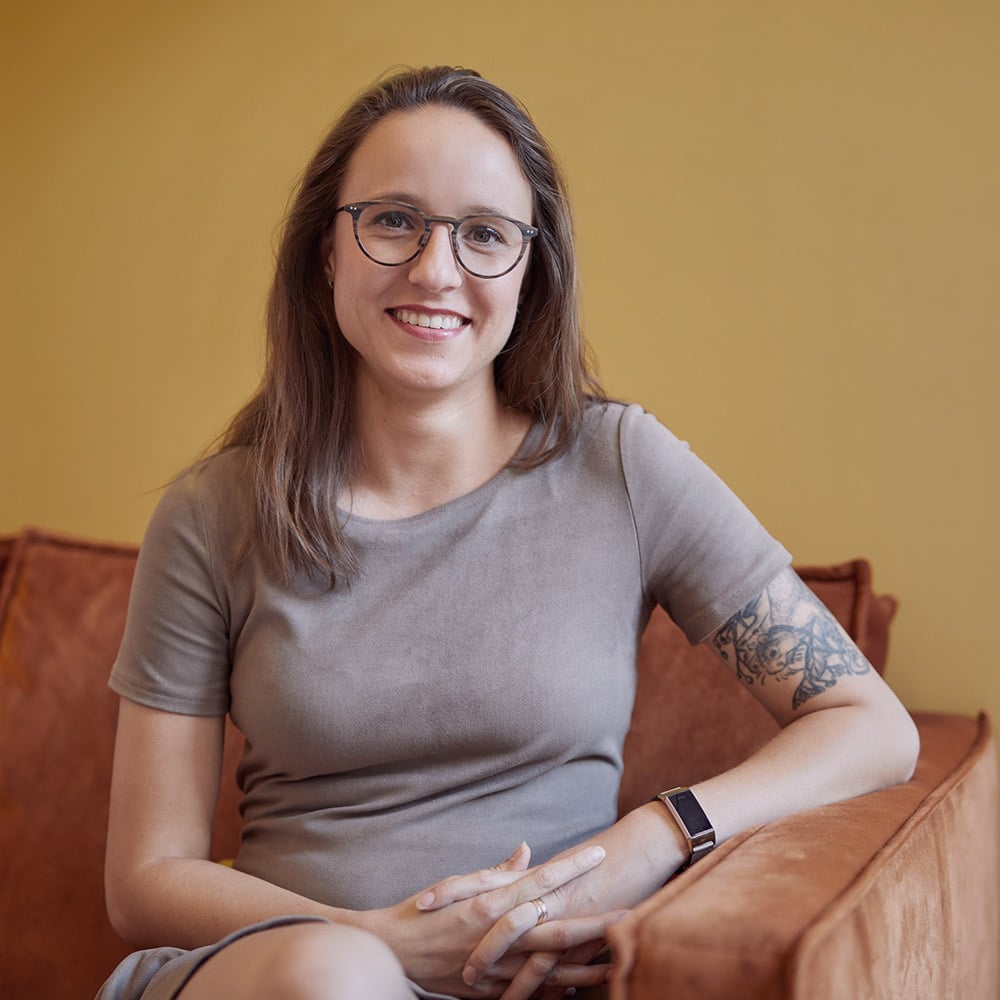
Graduate psychologist, specialized in Neuropsychology
My life has had its share of hardships and that is what makes me who I am today, what has built my resilience and what allows me to help others on a daily basis.
Melanie is a psychologist, specialized in Neuropsychology, graduated from the Faculty of Strasbourg, the city she comes from. After having worked with people with autism in associations and in specialized centers, she spent 3 months in California in a center for the elderly to perfect her English. Upon her return, she seized the opportunity to work in the field of Neurofeedback. Melanie now lives in Belgium with her partner and their cat. She is an avid car and video game enthusiast. She loves gardening, drawing, animals and food (especially cheese!). Recently, she started learning piano and yoga after having practiced horseback riding and archery for a long time.
“My life has had its share of hardships: divorced parents, a mother suffering from alcoholism, placement in social care, bereavement, sexual abuse… It is what makes me who I am today, what has built my resilience and what allows me to help others on a daily basis. Let me tell you how life has allowed me to become the best version of myself:
My dream job has always been a veterinarian but I quickly realized that these studies would be difficult for me. So when the choice of direction presented itself, I said to myself “Psycho? Why not! It sounds very interesting”. My first direction was developmental psychology to work with autistic children and help their families.
My school career came to a screeching halt in 2014: after 4 years, my little brother finally lost the battle with cancer. In pain, unable to attend classes, I had to repeat a year. This ordeal was decisive in my choice of career because during this second year, I discovered with a new eye neuropsychology and neurophysiology that I had previously cursed.
During these courses, the professors discussed Neurofeedback very briefly. I didn’t really understand… how could someone grow a flame on a screen with their brain and regulate their brain activity? How could it help him? When I asked around, there were two schools of thought: those for whom it was miraculous and those for whom it was lame and placebo. I wanted to make my own opinion, to test the technique. The universe heard me because an internship offer in a neurofeedback practice came in my emails. That’s how I met François, neurofeedback and I never left. It was what I was missing in my practice: to do neuropsychological assessments to identify the disorders yes, but afterwards? What solutions to help these suffering people? Practically nothing… Neurofeedback was that solution. I have seen so many positive changes, sometimes even real miracles with clients who have come back from a long way.
Thanks to the sessions I have had myself, my anxiety attacks, fatigue, poor sleep and difficulty concentrating are all gone.
In 2022, at the age of 27, I discovered that I had ADHD with severe Dyscalculia since childhood. A lot of things made sense! And despite these disorders that I didn’t know I had, I had successfully completed a Scientific Baccalaureate and a math-filled neuropsychology degree. So never let anyone tell you what you can and cannot do! This is my mantra: If you decide to, nothing can stop you. And your difficulties can become a strength. It is the trials of life that have made me so passionate about my work today.
I accompany people in discovering themselves, in understanding their difficulties and help them to get out of them thanks to EEG assessment and neurofeedback sessions. Geek at heart, I also deal with social networks and communication.”
Managing Director & recoveriX Therapist
Once you have been to the health professionals, Neurofeedback often brings relief that you no longer believe in. If only it were better known to the general public. We are looking for enthusiasts to spread the word.
Patrick is an entrepreneur from Luxembourg. He speaks Luxembourgish, German, English, French and understands (more and more) Danish.
After his banking training and his studies (A.E.S. – economic and social administration) at the University of Montpellier, Patrick joined the family business in Luxembourg. With the help of a team of almost 60 people, he developed innovative solutions for the financial sector and the institutions of the European Union.
Patrick has traveled to over thirty countries and lived in Australia for almost five years. He is married with two children and lives with his family in Luxembourg.
He has been the managing director of Neurofeedback Luxembourg since June 2022.
“My first encounter with Neurofeedback was the story of a girl who participated quite well in class, but consistently failed all her exams. Her parents (at the end of their rope, as you can imagine) had of course gone around to all the doctors, psychologists, etc. to find out why. Nothing. During an evaluation of her brain (brain map) during which she was watching a movie, François asked her if the movie scared her. She said no, that she found the movie rather amusing. What she didn’t know was that on the screen, her therapist and parents could see (even though her environment was not particularly stressful, on the contrary) that her brain was already in “overdrive” / in the “red” – like on the dashboard of a car. Adding the stress of a school test, one can quickly understand why she could not pass her exams. By “calming” the affected areas, through neurotherapy sessions, her brain learned very quickly what to do and what not to do. Thanks to Neurofeedback, her school career was very different from what she had experienced before and what would otherwise have been a burden for many years – both for her and for her parents. This is how I came to know (and understand?) how Neurofeedback can help where other disciplines have their limitations. I have become a big fan, having come to train my own brain as early as 2015 and my children’s. As a Neurofeedback client and a fan of technology in general, I decided in 2021 to get personally involved in what François had started.
I love working with this motivated, knowledgeable team on a daily basis, always striving to improve the lives of our customers. I am passionate about computers and setting up our systems – that’s for me.”
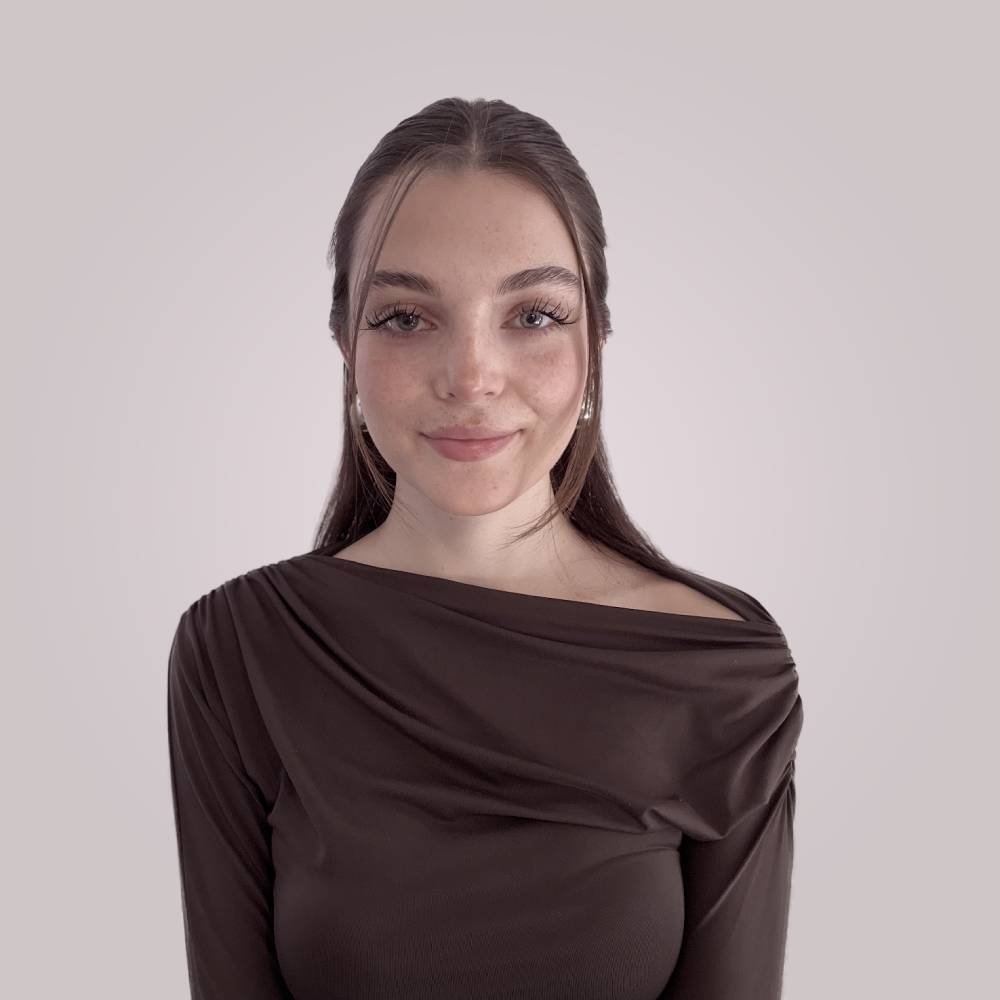
Clinical Assistant
Observe. Decode. Connect. My path to becoming a clinical psychologist.
Jill, 23, is currently pursuing a master’s degree in Psychological Intervention at the University of Luxembourg.
To complete her bachelor’s degree in psychology with a specialization in neuropsychology, Jill undertook an internship under the supervision of a neuropsychologist. She chose Neurofeedback Luxembourg, and after four weeks of intensive observation, she didn’t want to leave. Her desire to learn more about the practice only grew stronger.
“I was born and raised in Luxembourg, surrounded by animals and driven by a passion that went far beyond training them. Since I was a child, I’ve been riding horses and training dogs, competing nationally and internationally in agility. Over time, I realized it wasn’t just about the animals, it was about building a connection with something so different from me and turning that difference into harmony. It taught me to read and understand body language, to communicate without words, and to look beyond first impressions to uncover the deeper meaning behind behavior. I didn’t know it then, but this ability to decode subtle cues and understand nonverbal communication would later become one of my greatest strengths.
School didn’t always captivate me, but my curiosity constantly reached beyond textbooks and classrooms. I was fascinated by human behavior—by why we’re all so different, yet somehow so alike. That urge to decode human behavior sparked my early passion for psychology.
Following that spark, I began my academic journey at Université Paul Valéry – Montpellier 3, where my interest in science truly came to life. To complete my studies, I chose to step into the world of neurofeedback at Neurofeedback Luxembourg. I entered with an open heart, an eager mind, and just enough healthy skepticism and from the very first day, I was hooked. The team was supportive, dynamic, and deeply passionate about what they do. Those four weeks flew by in a blur of learning, growth, and discovery.
Watching clients evolve, from their initial assessments to achieving meaningful progress over time was eye-opening. The impact of neurofeedback wasn’t just something I read about; I witnessed it firsthand. That’s when I realized I had caught the “neurofeedback bug.” I wanted to keep learning, keep growing, and continue being part of this incredible team.
Today, I feel immensely grateful and proud to be part of such a dedicated group of people. The hands-on experience I’m gaining is invaluable, and I look forward to completing my studies and becoming a clinical psychologist. What began as curiosity has grown into a true passion, and I can’t wait to see where it takes me next.”
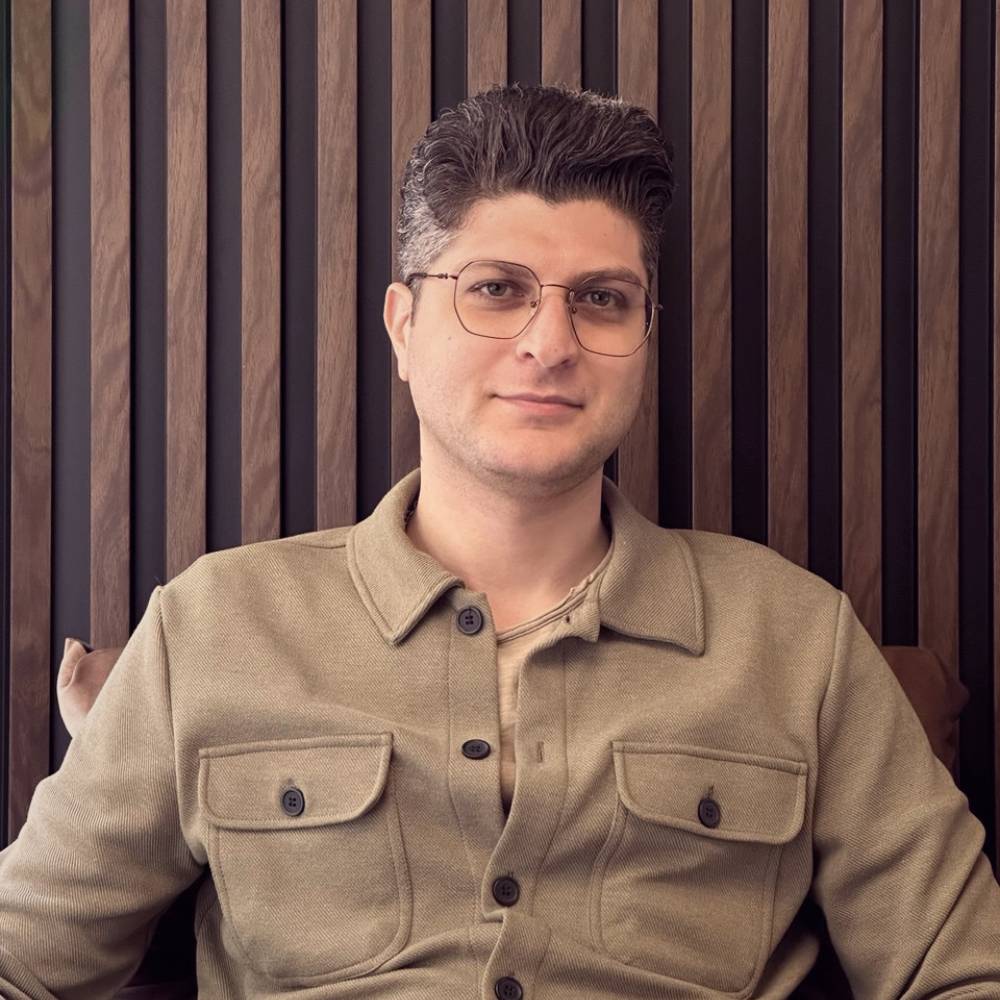
Postdoctoral Researcher
I’m fascinated by the intersection of computer science and cognitive science - understanding how technology can help us better understand the human brain.
Kayhan is a postdoctoral researcher working at the intersection of neuroscience, cognitive science, and artificial intelligence. Originally from Rasht, a city in northern Iran known as the “City of Silver Rain,” he first studied Computer Engineering at the University of Guilan.
Before moving into research, Kayhan spent several years programming and developing a strong interest in how machines process information. At some point, he came across the book Thinking, Fast and Slow by Daniel Kahneman, which sparked a new curiosity: if understanding machines is interesting, understanding the human mind might be even more fascinating.
This curiosity eventually led him toward cognitive science. He moved to Tehran to pursue a master’s degree in Artificial Intelligence and Robotics, where he began working with physiological signals such as EEG and eye tracking to study cognitive processes like mental workload and attention.
Kayhan later continued his academic journey in Europe, joining the Computational Interaction (COIN) Group at the University of Luxembourg, where he completed his Ph.D. under the supervision of Prof. Dr. Luis A. Leiva. His doctoral research focused on understanding cognitive states such as attention, emotion, and skill using neurophysiological and behavioral signals.
Today, Kayhan is part of a joint research program between Neurofeedback Luxembourg and the University of Luxembourg, supported by the Fonds National de la Recherche. His work focuses on connecting academic research with practical neurofeedback applications, helping translate scientific discoveries into tools that can improve people’s everyday lives.
“I started my career as a programmer and was fascinated by how computers process information. But after reading Thinking, Fast and Slow, I became curious about something even more complex: the human brain.
That moment made me realize that I wanted to work at the intersection of computer science and cognitive science.
During my master’s thesis, I had my first real experience working with EEG signals. I was fascinated by how much information about our mental states can be revealed through these signals. That experience strongly shaped the direction of my research.
During my Ph.D., I explored how signals such as EEG and eye tracking can help us understand cognitive states like attention, emotion, and learning. Today, I enjoy applying this knowledge to projects that connect scientific research with real-world neurofeedback applications.
In short, I’m the scientist in the team – exploring how technology can help us better understand the brain.”
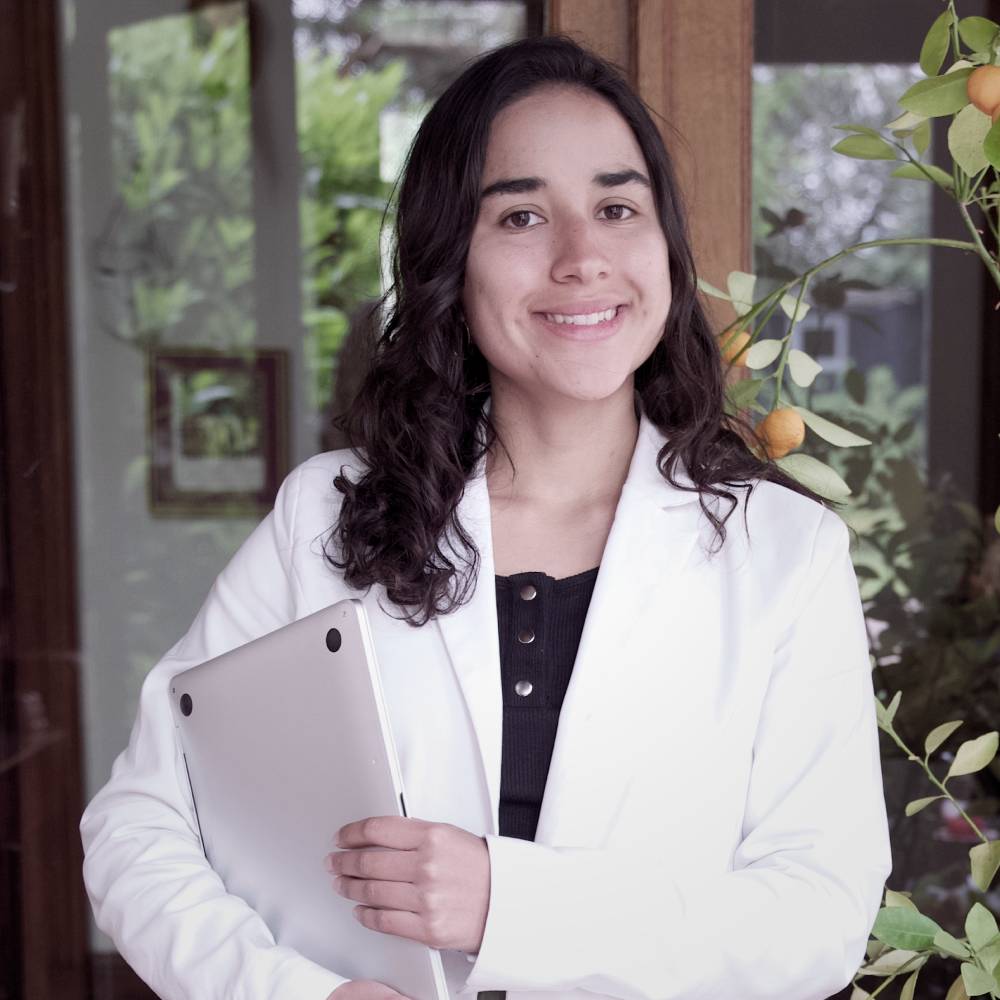
Communications specialist
In my different projects, the idea of having a positive impact on people's lives or the environment is my compass, my motivation.
With a Double Master’s Degree in International Strategic Communications, Maria Camila Gallego carried out her university studies in Canada and Belgium. She is now a communications specialist for organizations dedicated to helping people and the environment by developing innovative solutions.
“Since my childhood, I’ve been collecting fragments of life through writings or images. This passion for storytelling and sharing messages led me to study communications, as a way of supporting organizations in spreading their mission. I’m also passionate about travel and adventures, and attach great importance to social and ecological impact. I favour taking the train, doing slow travel and interacting with the local population.
When I discovered Neurofeedback Luxembourg, I was immediately attracted by the mission of the whole team to mobilize science to support mental health, with a rigorous, evidence-based approach. It’s a privilege to be part of the organization’s efforts to reach more people and enable them to discover the benefits of Neurofeedback, and thus improve their daily lives.”
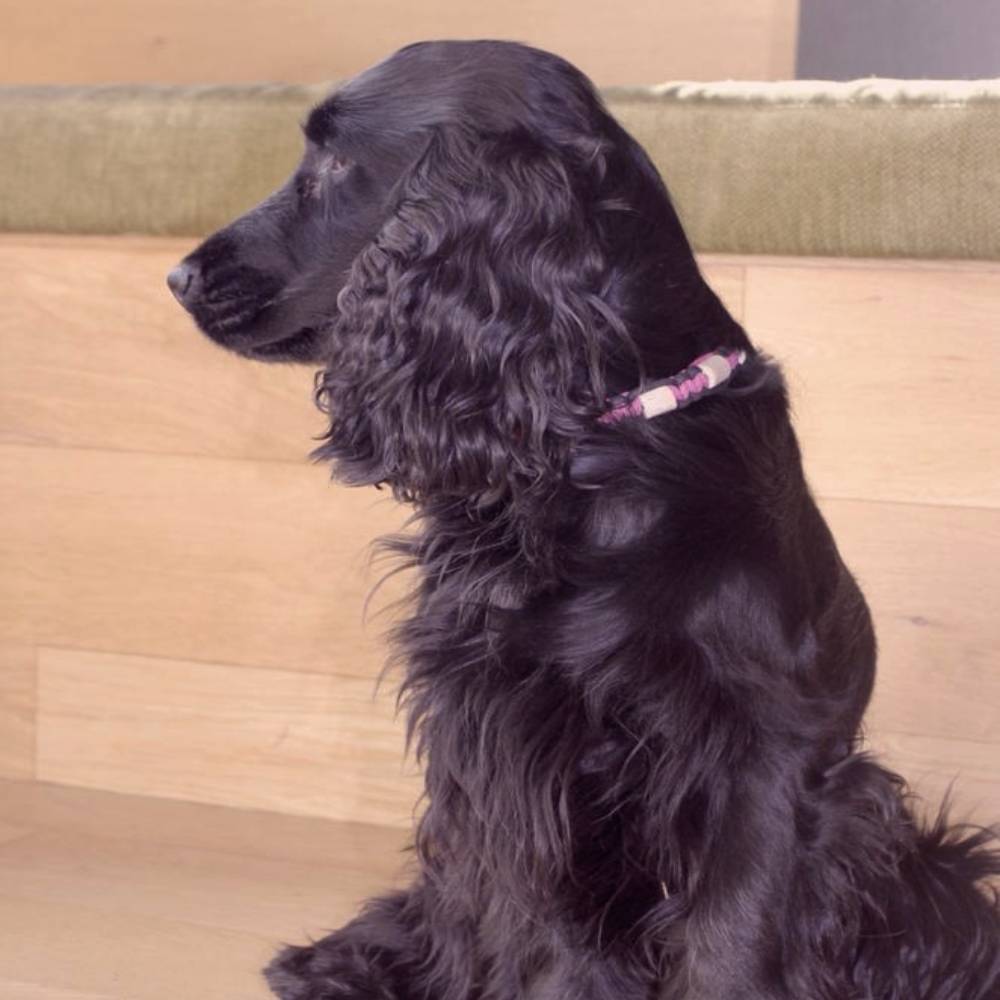
Neurofeedback’s mascot 😊
Coco, an adorable black cocker spaniel born on June 21st, 2021, who works with us every day and belongs to Patrick, our managing director, is Neurofeedback’s mascot.
She is very friendly to all team members, and is much loved by our customers, especially the children.
She also loves to play, and when she’s not having fun, she rests at the feet of one of our team members.
Slightly visually impaired, Coco is clumsy, but that doesn’t stop her from taking on the role of vacuum cleaner at Silversquare and doing anything for a biscuit.
A little scaredy-cat at heart, she barks when she can’t see properly. Apart from that, she’s always wagging her tail to show us how happy she is.
Endowed with many qualities, Coco is a true therapy dog. She’s both independent and loyal, often going off on her own and meeting up with us later.
Her gentleness and loving nature make her a precious companion for those who meet her.
In short, Coco is a comforting and precious presence for our team and our customers. We all have a great affection for her.
We promise we will only send you quality content. You can unsubscribe at any time.
We promise we will only send you quality content. You can unsubscribe at any time.